Conveyor Belt Splicing Methods: A Technology Overview by BITUMEX
The uninterrupted operation of a belt conveyor directly depends on the reliability of its tensile belt. Statistically, up to 80% of unplanned equipment shutdowns occur due to joint failures. To minimize production downtime, it is crucial to select the right conveyor belt splicing methods.
BITUMEX performs professional repair and maintenance of conveyor systems. In this article, we will examine in detail the main methods of conveyor belt splicing, their advantages, and specific application features.
Comparative Analysis of Belt Splicing Technologies
| Selection Criteria | Hot Vulcanization | Cold Vulcanization | Mechanical Fastening | |
| Joint Strength | Maximum (up to 95%) | High (up to 70%) | Medium (up to 50%) | |
| Installation Time | 6 to 12 hours | 4 to 8 hours | 30 minutes to 2 hours | |
| Environmental Impact | Any humidity and dust | Requires dry conditions | Allows installation in mud/frost | |
| Service Cost | High | Medium | Low | |
| Joint Flexibility | Absolute | High | Rigid joint |
Vulcanization: Maximum Strength and Longevity
Conveyor belt splicing via vulcanization is the most reliable repair option, achieving a joint strength of up to 95% of the intact belt. This process is performed using two distinct technologies:
Conveyor Belt Hot Splicing
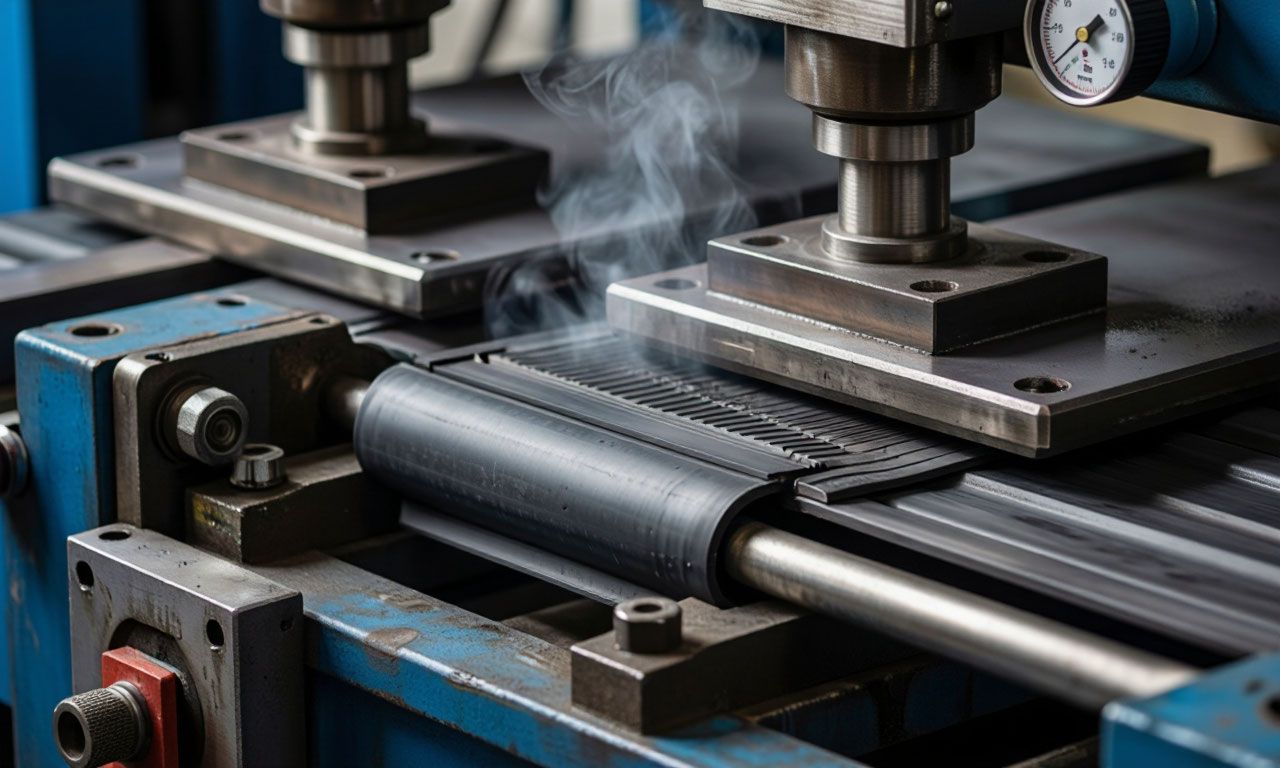
This method fully replicates the factory manufacturing process. Conveyor belt hot splicing is performed using a specialized vulcanizing heating press. The belt ends are stepped, lined with unvulcanized rubber, treated with compounding solutions, and cured under high temperature (up to 150 °C) and pressure.
- Applications: Conveyor belt hot vulcanization splicing is indispensable for heavy-duty lines, transport of high-temperature materials, underground mines, and quarries.
- Pros: The joint has the exact same thickness as the belt, does not damage cleaning scrapers, and is highly wear-resistant.
Conveyor Belt Cold Splicing
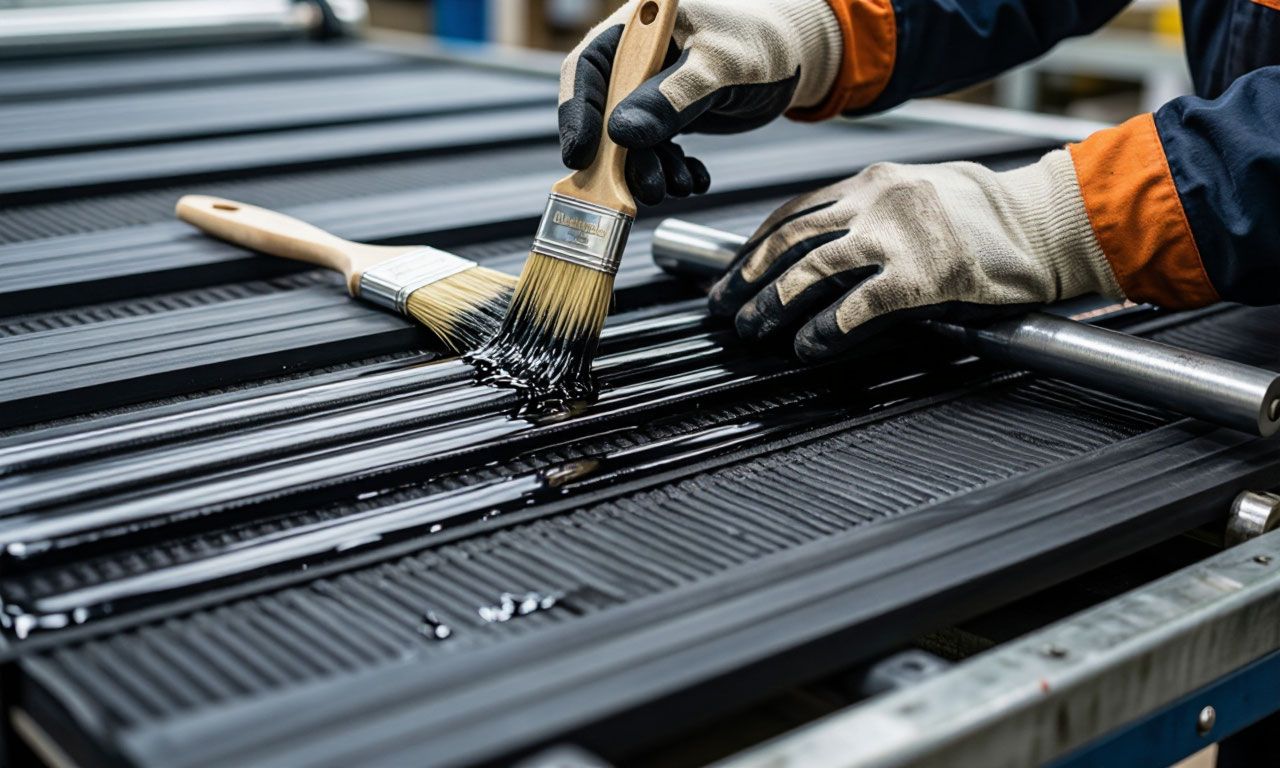
This method is based on the chemical bonding of prepared belt ends. The process does not require heavy heating equipment but depends heavily on environmental conditions: the ambient temperature must be at least +5 °C, and the work area must be completely protected from moisture and dust.
- Applications: For medium-duty conveyors in the chemical, food processing, and light industries.
- Pros: Fast execution speeds, along with affordable material and service costs.
- Cons: Requires adhesive curing time (up to 24 hours) before starting the conveyor.
Mechanical Conveyor Belt Fastening
When repair speed is the top priority, mechanical conveyor belt fastening is used. This method allows the conveyor to be restarted as quickly as possible without the use of chemicals or presses.
- Specialized metal fasteners (such as bolt, hinged, or staple systems like Flexco and Alligator) are used to secure the belt ends.
- Applications: Used as an emergency repair method for accidental belt breaks, as well as on light-duty conveyors.
- Pros: Installation takes as little as 30 minutes; work can be successfully carried out at sub-zero temperatures and high dust levels.
- Cons: The metal joint wears out faster than rubber, can cause abrasion on conveyor rollers, and may damage cleaning scrapers.
Professional conveyor belt splicing services by BITUMEX
BITUMEX specialists will select the optimal belt connection method based on your specific business requirements, the type of material handled, and your budget. We use only certified materials and guarantee minimal equipment downtime.
If you would like to order the service or consult with a specialist, please provide the following details:
- What are the length, width, and thickness of your conveyor belt?
- What type of material (abrasive, food-grade, high-temperature) does the conveyor transport?
- What are the operating conditions at the site (temperature, humidity, available space around the conveyor)?
Submit your request, and we will help calculate the exact cost and schedule the deployment of our repair team!
Our Partners
We are trusted by leaders in the mining, metallurgical, and processing industries. The reliability of BITUMEX is proven by long-term contracts with major ore-dressing plants, open-pit mines, and underground shafts where conveyor systems operate under extreme loads 24/7. We value the trust of our partners and deliver a tailored approach, flawless servicing, and uncompromising quality at every facility.



















© 2026 BITUMEX LLP. All rights reserved.